

Your Path to Homeownership: A First-Time Buyer's Guide to Buying a House
Buying your first home can feel exciting and intimidating at the same time. Many buyers start the process wondering where to begin, how much they can afford, and what actually happens after an offer is accepted.
The good news is that the process follows a clear path. When you understand each stage in advance, it becomes much easier to move forward with confidence.
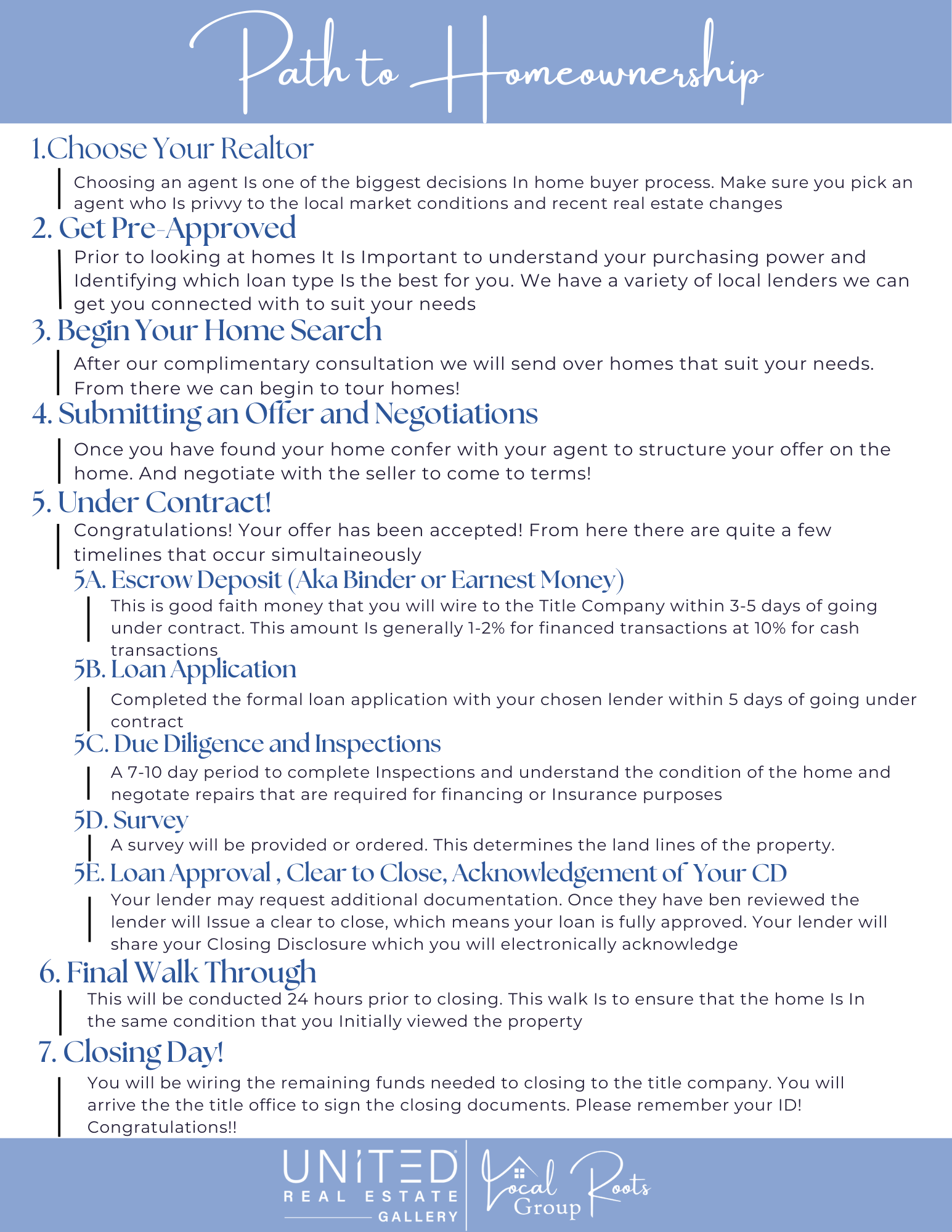
Below is a step-by-step breakdown of what the journey to homeownership typically looks like.
1. Choose Your Realtor
One of the most important decisions you will make early in the process is choosing the right real estate professional.
A knowledgeable agent guides you through every step of the process and protects your interests throughout negotiations and contracts.
A great Realtor will help you
• Understand local market conditions
• Identify homes that fit your lifestyle and budget
• Coordinate showings and tours
• Structure competitive offers
• Navigate contracts, inspections, and deadlines
For first-time buyers especially, having someone experienced by your side can make the process far less stressful.
2. Get Pre-Approved
Before you begin touring homes, it is important to understand your purchasing power.
A mortgage pre-approval allows a lender to review your finances and determine what price range you qualify for.
Pre-approval helps you
• Understand your realistic budget
• Estimate monthly payments
• Identify the best loan program for your situation
• Strengthen your offer when competing with other buyers
Many buyers find this step reassuring because it replaces uncertainty with a clear financial picture.
3. Begin Your Home Search
Once you are pre-approved and we have had our consultation, the home search can begin.
Based on your goals, budget, and lifestyle preferences, homes will be sent to you that match what you are looking for.
From there, we begin touring properties and evaluating which homes feel like the right fit.
When touring homes, buyers typically evaluate
• Location and commute
• Layout and functionality
• Condition of the home
• Long-term resale potential
• Neighborhood lifestyle
This stage is when many buyers see their vision come to life.
4. Submit an Offer and Negotiate
When you find the home you want, the next step is submitting an offer.
An offer includes several components, such as
• Purchase price
• Financing details
• Inspection period
• Closing timeline
• Contingencies
The seller may accept the offer, decline it, or negotiate different terms. Your agent will help structure the offer strategically and negotiate on your behalf.
This step ensures you are purchasing the home at fair terms while protecting your interests.
5. Under Contract
Once your offer is accepted, the home goes under contract. This is when several important steps begin happening simultaneously.
5A. Escrow Deposit
Also called binder or earnest money.
This is a good-faith deposit that is typically wired to the title company within a few days of going under contract.
For financed purchases, this is often around one to two percent of the purchase price.
5B. Loan Application
After the contract is signed, you will complete the formal mortgage application with your lender.
The lender will begin processing your loan and may request documents such as
• Income verification
• Bank statements
• Tax returns
• Employment confirmation
This step begins the official loan approval process.
5C. Due Diligence and Inspections
During the inspection period, buyers have the opportunity to fully evaluate the property.
Home inspections typically review
• Roofing
• Plumbing
• Electrical systems
• Structural components
• Major appliances
This period allows buyers to better understand the home's condition and negotiate repairs if necessary.
5D. Survey
A survey confirms the property boundaries and land lines.
This step ensures there are no boundary issues, encroachments, or unexpected property concerns.
5E. Loan Approval and Clear to Close
As your lender reviews all documentation, they move the loan through underwriting.
Once everything is approved, the lender issues a clear-to-close, meaning your mortgage has been fully approved.
Your lender will also provide your Closing Disclosure, which outlines the final loan details and closing costs.
6. Final Walk Through
About 24 hours before closing, buyers complete a final walk-through of the property.
This visit ensures that
• The home is in the same condition as when it was viewed
• Any negotiated repairs have been completed
• No unexpected issues have appeared
This step provides peace of mind before closing.
7. Closing Day
Closing day is the final step in the home-buying process.
At closing, you will
• Wire the remaining funds needed to close
• Sign your loan and title documents
• Officially transfer ownership of the property
Once everything is signed and recorded, you receive the keys to your new home.
Congratulations. You are now a homeowner.
Key Takeaways for First-Time Buyers
Buying your first home may seem complicated at first, but the process becomes much easier when you understand the path.
The most important steps include
• Choosing the right real estate professional
• Getting pre-approved before searching for homes
• Touring properties that fit your goals
• Structuring a strong offer
• Completing inspections and loan approval
• Closing on your new home
Each step moves you closer to homeownership.
Ready to Start Your Path to Homeownership?

If you are thinking about buying your first home, the best place to start is with a conversation.
During a consultation, we can discuss
• Your goals for buying a home
• Your current financial situation
• Loan options available to you
• The local housing market
• A step-by-step plan for your home search
🏡 Schedule a Home Buying Consultation
If you are ready to begin your path to homeownership, schedule a consultation and we will create a plan tailored to you.
